Preparing for a Somatropin Monitoring Appointment
A GH monitoring visit should leave you knowing what was discussed, what remains uncertain and who will handle the next step. Bring observations about benefit, symptoms and the practical burden of treatment, then make pending results part of the written plan rather than an afterthought.
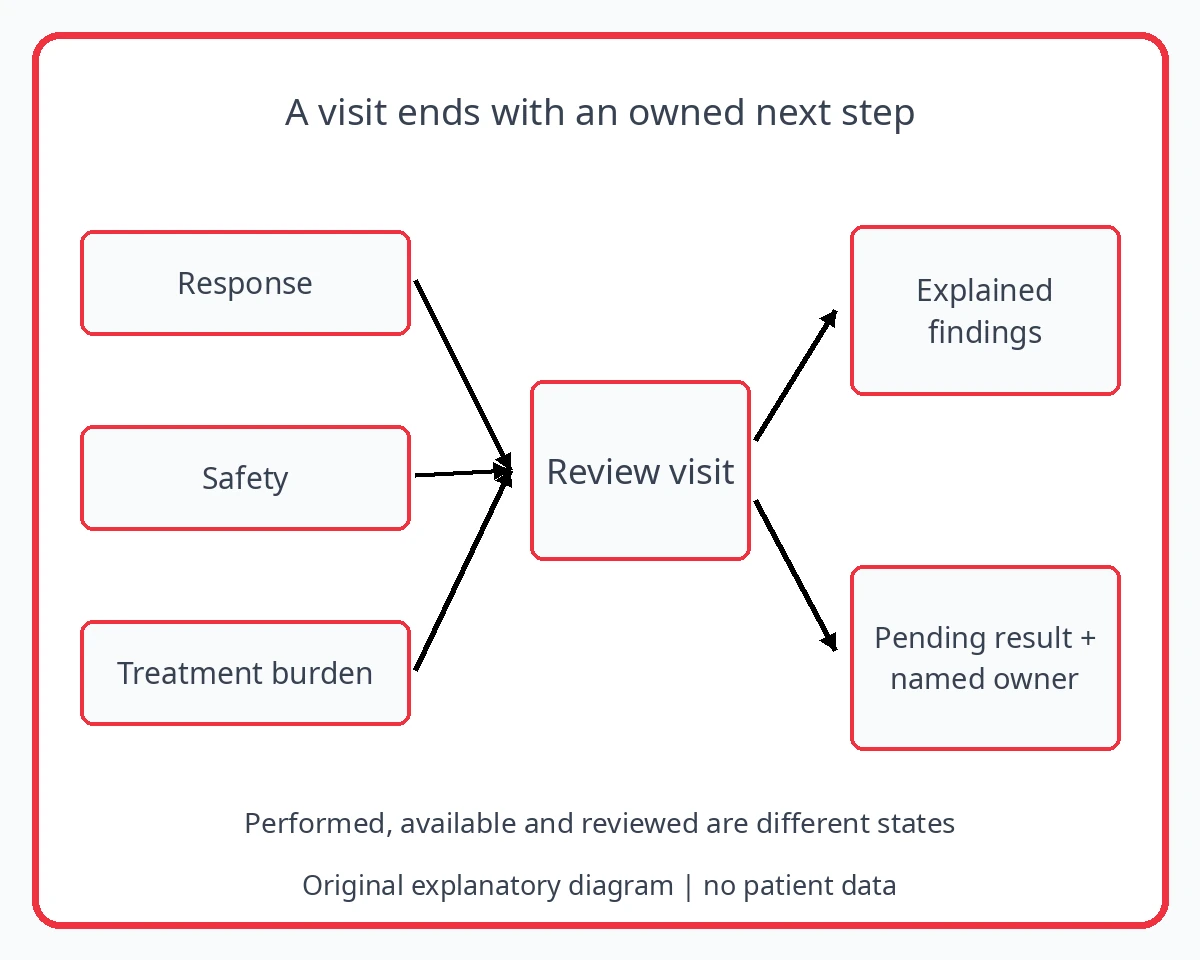
Prepare three questions that do not cancel each other out
The Pituitary Society describes follow-up during replacement treatment as reviewing response and safety. Start with the activity or goal that matters to you, any unwanted symptoms and the clinical checks already arranged. A favourable report does not automatically answer whether daily function improved, and a useful change in daily life does not make a symptom irrelevant.
Add the practical effort of following the current plan. Difficulty with instructions, travel, storage or the device is worth discussing even when you do not know the solution. Say exactly where the difficulty occurs. The aim is to let the team understand the real routine, not to present an ideal version that hides problems you need help solving. [1]
Use a short agenda backed by the original records
AHRQ recommends preparing questions and bringing medicine information to an appointment. Choose the few concerns you most want explained, then have the diary, original reports and current instructions available to support them. A summary helps the conversation start; the underlying records preserve the details if a date, unit or wording needs checking.
Mark the status of each test carefully. “Requested,” “sample taken,” “report available” and “result explained” are different steps. If you have only a portal notification, do not record that a clinician has reviewed the finding unless that review has been communicated. This distinction keeps an apparently complete appointment from concealing an unfinished result. [2]
If thyroid testing was discussed, keep a thyroid test request distinct from a result when adding it to the same agenda.
If glucose is one of the outstanding checks, prepare questions about a pending glucose result separately from an IGF-1 report already received.
A visit that ends with one result still pending
A fictional example illustrates the distinction. It is not a patient record, a diagnostic tool or a treatment instruction.
| Item | Observation or status | What remains separate |
|---|---|---|
| Daily function | Usual task and diary discussed at the visit | The clinician’s interpretation, not a home-made success score |
| New symptom | Concern raised; advice recorded in the visit note | Any later change needs its own follow-up |
| IGF-1 report | Available and explanation recorded | Does not close the separate pending test |
| Requested glucose result | Sample collected; report still pending | Endocrine team will explain it when available |
| Communication | Team and contact route named; timing to be clarified before leaving | A result task is not complete merely because the visit ended |
Give the unfinished result a clear next step
In the fictional visit, several useful discussions have happened, but the glucose report is still missing. “Everything discussed” would be a poor handover because it does not tell the person what to expect next. The note should identify the pending result and the team responsible for explaining it.
The timing and fallback plan still need clarification: when and how should the person follow up if the expected communication does not arrive? That question needs clarification before leaving rather than an invented deadline added later. The answer should reflect the service’s actual plan, while the route for a new or urgent symptom remains separate.
Bring the dated observations prepared in Keeping a Monitoring Diary During Prescribed Growth Hormone Treatment
Repeat the plan in your own words
AHRQ encourages patients to ask about next steps and seek clarification when instructions are unclear. Try a short restatement: “This is what has been reviewed; this result is still pending; this team will contact me.” Ask the clinician to correct anything you have misunderstood and request the written information you need.
Keep instructions from different teams identifiable by date and source. If they conflict, ask the teams to resolve the conflict instead of silently combining them. Record any agreed action with its owner and timing, and keep unanswered questions visible. The appointment record captures the plan made with you; it does not choose a standard laboratory panel or a universal review interval. [2]
For a written record of the plan after a visit, use An Adult Endocrine Follow-Up Checklist for Shared Decisions
Record the agreed plan rather than inventing one
No standard appointment interval or laboratory panel is proposed. The responsible clinician must set the plan for the diagnosis, product and individual circumstances.
Sources and reading context
- Pituitary Society growth hormone deficiency patient booklet — Patient education, adult history/testing and prescribed-care follow-up; not an individualized protocol
- AHRQ preparation for healthcare appointments — Organize concerns, questions and medicines for discussion