Questions About Glucose Monitoring During Growth Hormone Treatment
An IGF-1 result and a glucose result answer different questions during prescribed GH care. Receiving one does not settle the other. Knowing what each planned check is for helps you follow the clinician’s plan without turning a reassuring number into permission to skip another test.
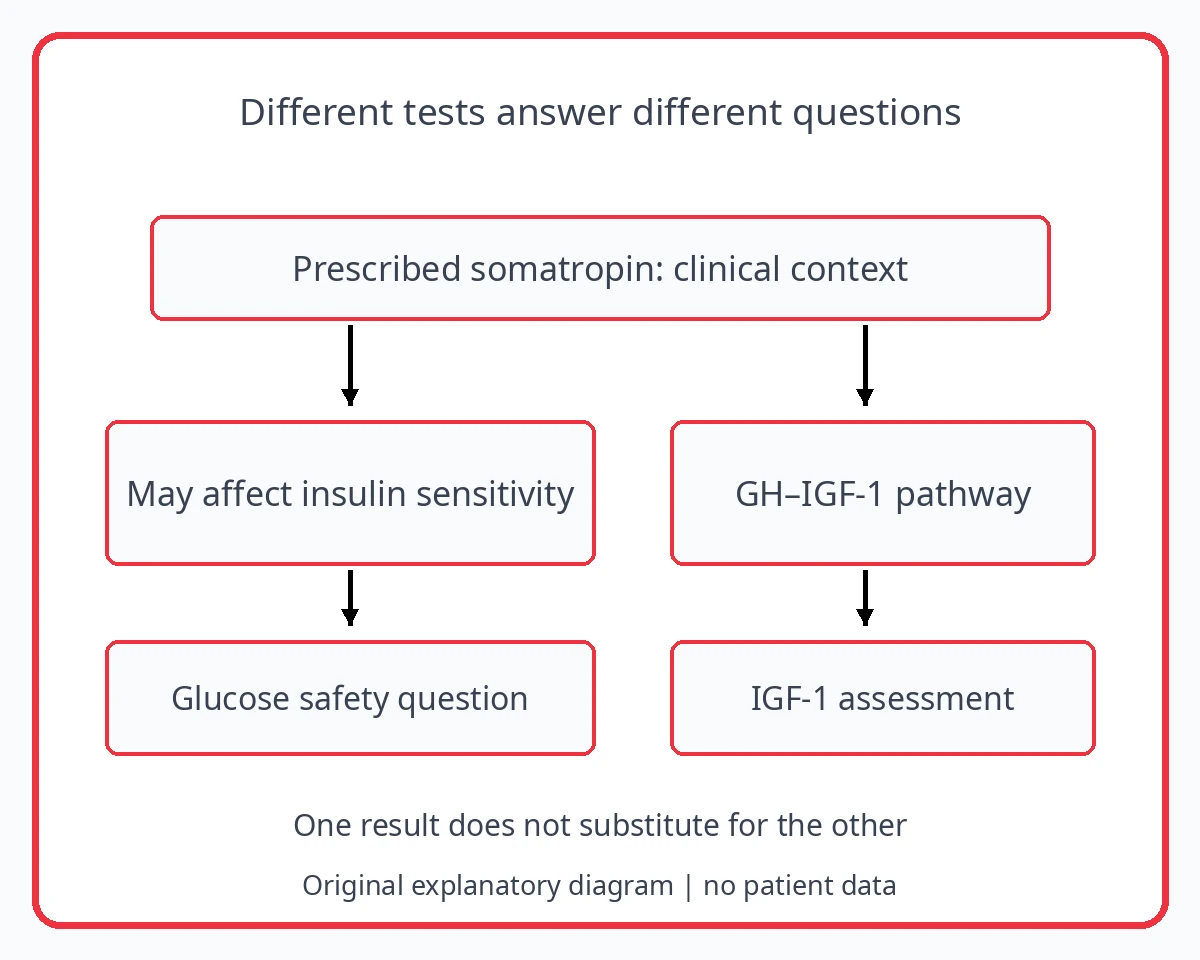
Why glucose has a separate place in the review
The US Genotropin label warns that somatropin may reduce insulin sensitivity and make glucose problems apparent. This is a reason for clinical monitoring, not a prediction that everyone receiving treatment will develop diabetes. The label is a named product source; your team must apply the appropriate information to your actual prescription and circumstances.
IGF-1 is another part of the assessment. A report in that field is not a substitute for a glucose measurement, even if both tests were discussed at the same appointment. Keep their names, dates and purposes separate. If you do not know why a particular test was requested, ask for the question it is intended to answer instead of interpreting the request as a diagnosis. [1]
When copying glucose or hormone reports, preserve units as explained in Reading Units and Reference Intervals on Hormone Test Reports
Bring the context that makes the plan individual
The Pituitary Society describes follow-up as checking treatment response and safety. Tell the team about any known diabetes or previous glucose concern, the medicines used for it and relevant history you actually know. If a family detail is uncertain, say so. Filling gaps with guesses can make a clinician’s starting information less reliable.
Ask which glucose measurement has been arranged and where its instructions will come from. Different appointments or tests may have different preparation, so do not invent a fasting rule from a general article. If an instruction conflicts with your established care plan, have the responsible service clarify it before the appointment. Keep that clarification with the original request. [2]
Two results discussed at one visit, but only one received
This fictional record illustrates coordination of an existing care plan. It is not a recommended test panel or testing interval.
| Item | Recorded status | Question to clarify |
|---|---|---|
| IGF-1 | Report received on 14 October; explanation not yet recorded | Who will explain it in the treatment context? |
| Glucose check | Sample collected on 14 October; report not yet received | Which result remains pending? |
| Existing glucose care | Patient has a separate current plan from the diabetes team | Which team coordinates any conflicting instructions? |
| Preparation | Service-specific instruction kept with the request | Is any part unclear before the test? |
| Follow-up | Endocrine team named as contact for these requested results | What contact route and timing have actually been agreed? |
“A result arrived” is not the same as “all results reviewed”
In the fictional record, the person can open an IGF-1 report but is still waiting for the glucose report. Neither the presence of the first file nor a comment that it “looks fine” establishes the glucose status. The useful next question is which findings the team has received and interpreted.
The separate diabetes care plan also stays visible. If the two services give instructions that appear inconsistent, keep the wording and dates of both and ask them to reconcile the difference. Do not choose an instruction by assuming that the most recently opened document automatically replaces the other team’s plan.
For how glucose findings sit alongside other somatropin follow-up considerations, see HGHThai’s overview of adverse effects and monitoring
Make the result handover as clear as the appointment
Keep the original report, including units and any reference information, rather than copying a number into a message without its context. Mark whether the report is available, whether the responsible clinician has reviewed it and what explanation or next action was given. These are separate events, and a portal notification alone does not prove all three happened.
If you already record glucose under an agreed plan, bring those records without adding a new self-testing frequency from this article. Ask how to raise a concern between visits and follow the clinical instructions you receive. The purpose here is to keep the plan understandable and traceable, not to supply diagnostic cutoffs or adjust GH or glucose-lowering medicines.
Keep this check within the full appointment plan in Preparing for a Somatropin Monitoring Appointment
Follow the individual testing and treatment plan
No diagnostic glucose cutoff, self-testing frequency or adjustment to GH or glucose-lowering medicines is provided. Follow your treatment team’s individualized plan.
Sources and reading context
- Pfizer Genotropin prescribing information — Exact product label; do not transfer storage, dose or warnings to every GH product
- Pituitary Society growth hormone deficiency patient booklet — Patient education, adult history/testing and prescribed-care follow-up; not an individualized protocol